SELF-BREAST EXAMINATION

Due to hormonal changes, many women experience lumpier, tender breasts just before and during menstruation, making it difficult to know what is normal.

The best time to perform a self‑breast examination is 7 to 10 days after your period begins every month, when breasts are less swollen and more natural in size and texture. This timing makes it easier to detect anything unusual.

If your periods are irregular, choose a specific day each month and perform your self‑breast examination on that same day. This consistency will help you recognize what is normal for you and detect any unusual changes early.

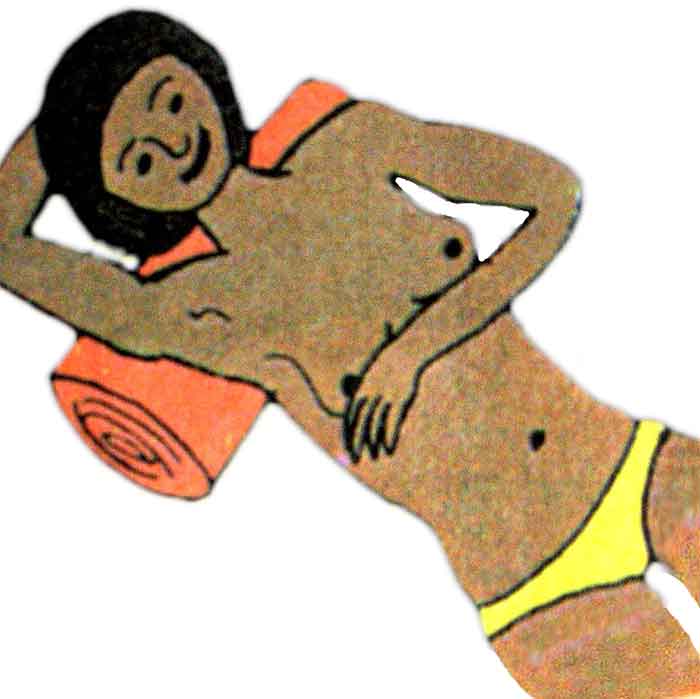
Examining your breasts by touch lying down

©BAFROW Medical Centre

Step 1

  • Lie down on your back with your right arm raised above your head, elbow bent
  • Place a pillow under your right shoulder
  • Use the pads of your index, middle and ring fingers of your left hand to press firmly down on your right breast in small circular and up-and-down motions

©BAFROW Medical Centre

Step 2

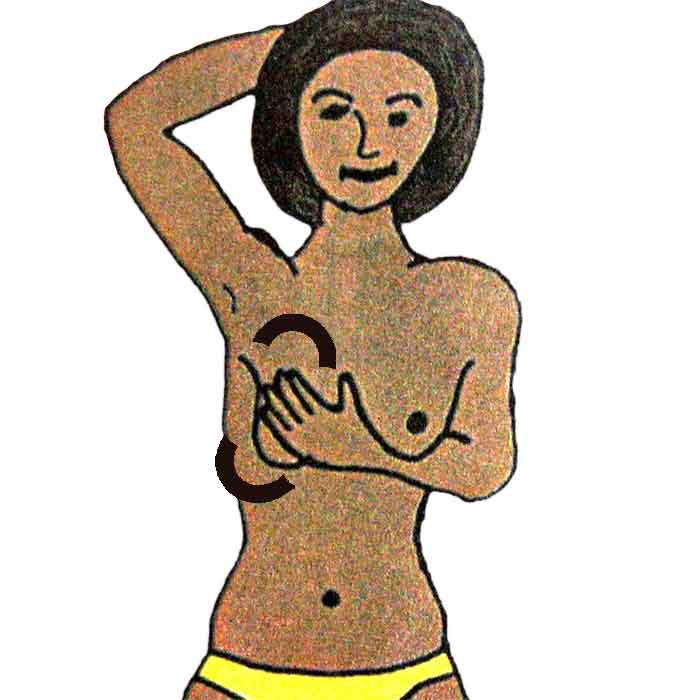
  • Examine the topside of your breast, underneath your breast, on both sides of your breast
  • Examine your nipple for any irregularities

©BAFROW Medical Centre

Step 3

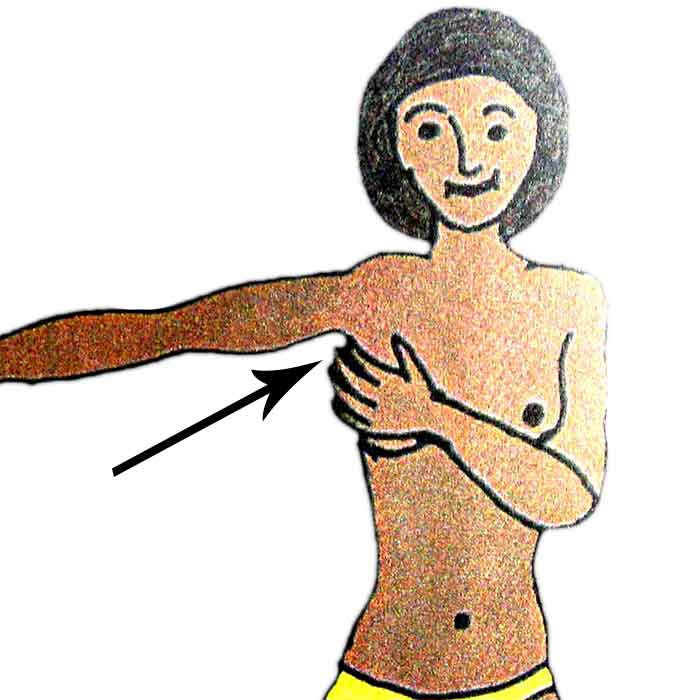
  • Examine your armpit thoroughly
  • Repeat Steps 1 – 3 for your left breast

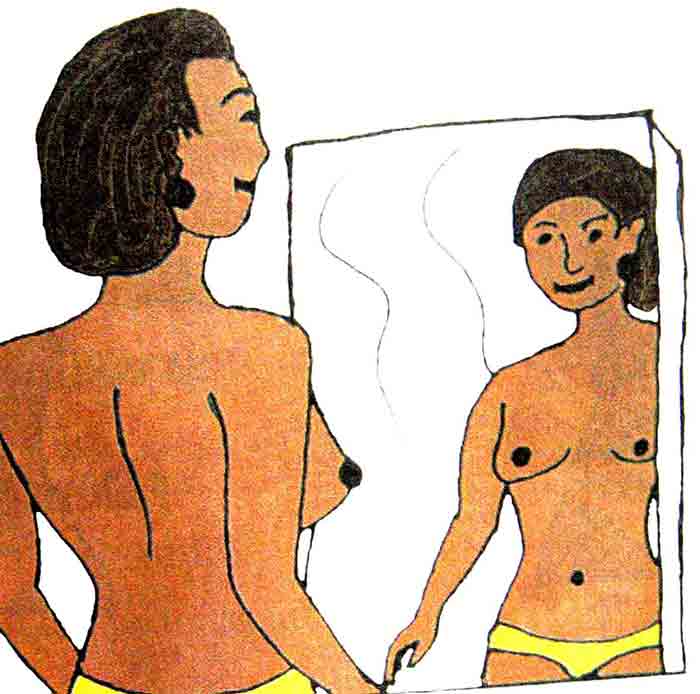
Examining your breasts visually in front of a mirror

©BAFROW Medical Centre

Step 1

Stand in front of a mirror with your palms on your hips (akimbo stance) and look for anything unusual on both breasts. 

Step 2

Raise both arms high above your head and inspect  both breasts and armpits for irregularities.

Step 3

Relax both arms down at your sides and inspect your breasts for irregularities.

Take about ten minutes every month to examine your breasts. 

Regular self-breast examination could save your life.

Finger motions during examination

You can use several motions to ensure every inch of your breast is examined. Below are two motions that are effective.

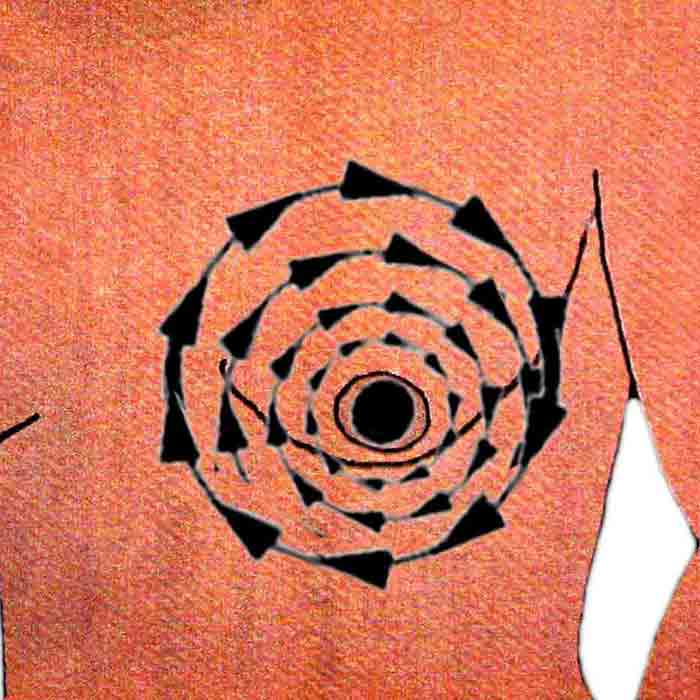
Circles

©BAFROW Medical Centre

Starting from the base of the breast, work your fingers slowly outwards and around the swell of your breast until you reach the nipple.

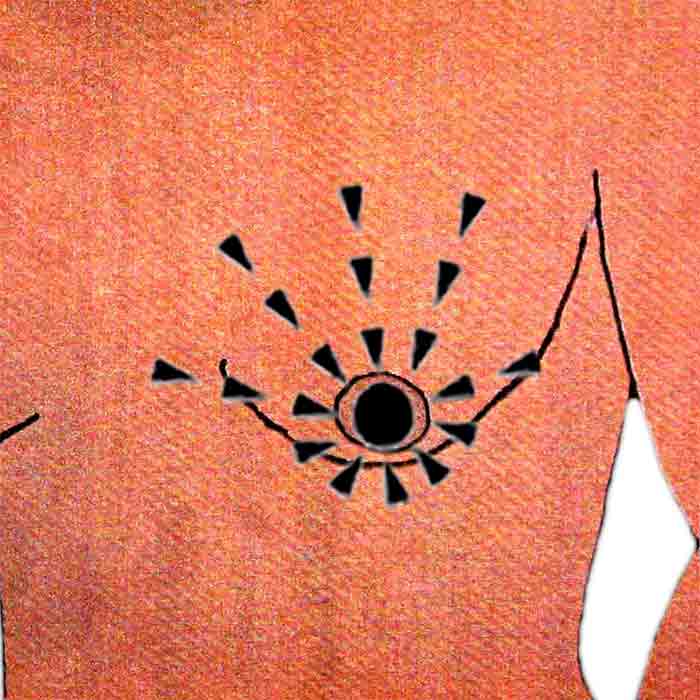
Wedges

©BAFROW Medical Centre

Starting from the base of the breast, work your fingers slowly outward in a straight line to the tip of the nipple and back again. Repeat to cover the entire breast.

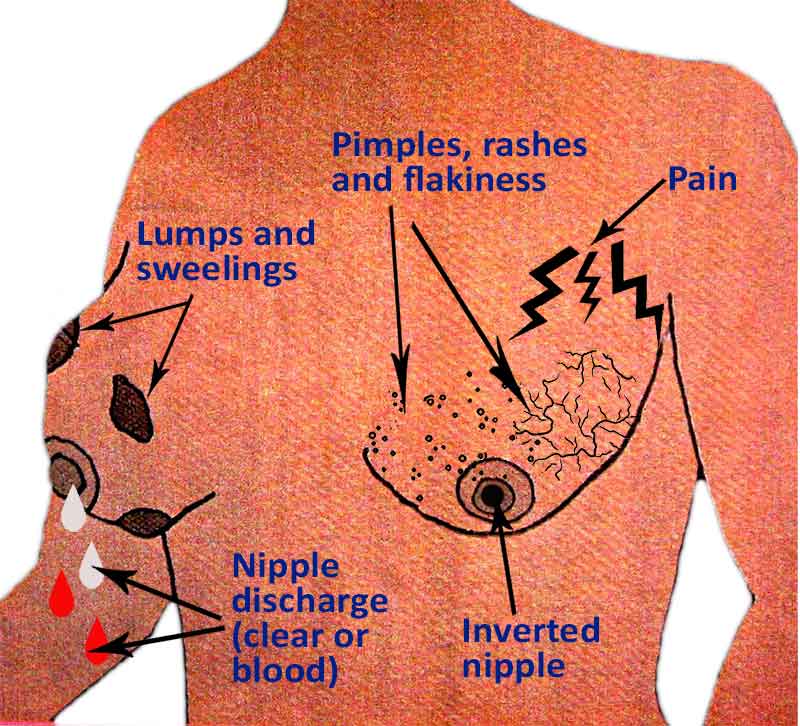
What to feel and look for while examining your breasts

  • Increase in breast size
  • Lumps and swellings in breast and armpit
  • Pain in breast and armpit
  • Rashes and pimples on breast
  • Flakiness/ dryness of skin
  • Nipple discharge, clear liquid or blood
  • Inverted nipple or other nipple abnormally

©BAFROW Medical Centre

Scroll to Top